KOREAN HOME COOKING
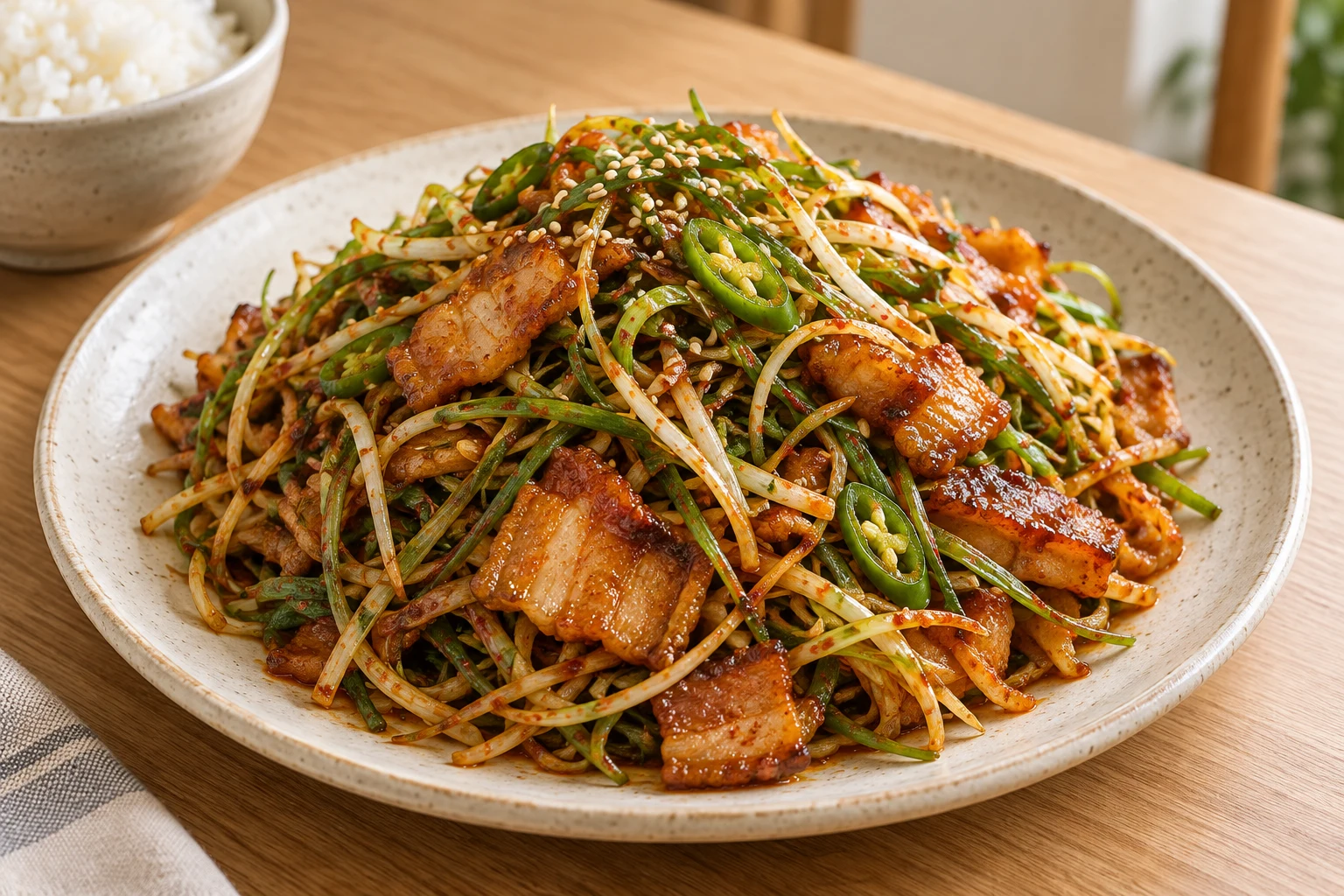
Pachae Jeyuk (파채 제육): Spicy Pork Belly with Scallions
파채 제육 · Pachae Jeyuk
Golden pork belly is glazed with caramelized sugar and soy sauce, then tossed at the last moment with a mountain of spicy, sweet-tart shredded Korean green onion.
Editorial guidance updated September 16, 2026 · Not a claim of kitchen testing
QUICK ANSWER
What to know before you cook
Golden pork belly is glazed with caramelized sugar and soy sauce, then tossed at the last moment with a mountain of spicy, sweet-tart shredded Korean green onion.
Pachae Jeyuk (파채 제육) takes about 35 minutes and makes 3 servings. It is rated moderate and the finished dish is hot as written, with 5 tablespoons gochugaru and two Cheongyang chiles. For medium heat, use 3 tablespoons mild gochugaru and one seeded chile. For mild, use 2 tablespoons mild gochugaru and omit the fresh chiles; do not replace gochugaru measure-for-measure with cayenne.
The key cooking cue: The cold soak softens the raw onion bite and helps the strands curl. Water left on them will dilute the seasoning and make the skillet steam.
WHY THIS DISH MATTERS
A little cultural context
Jeyuk-bokkeum is Korea’s familiar family of spicy stir-fried pork dishes. Pachae means finely shredded green onion, a classic partner for samgyeopsal because its sharp freshness cuts through rich pork fat. This broadcast version brings those two ideas together: pork belly gets a smoky sugar-and-soy glaze before a large batch of just-seasoned pachae is tossed in at the very end.
INGREDIENTS
What you'll need
Both systems are shown so you can cook without converting.
COOKING WEBTOON
Cook it panel by panel
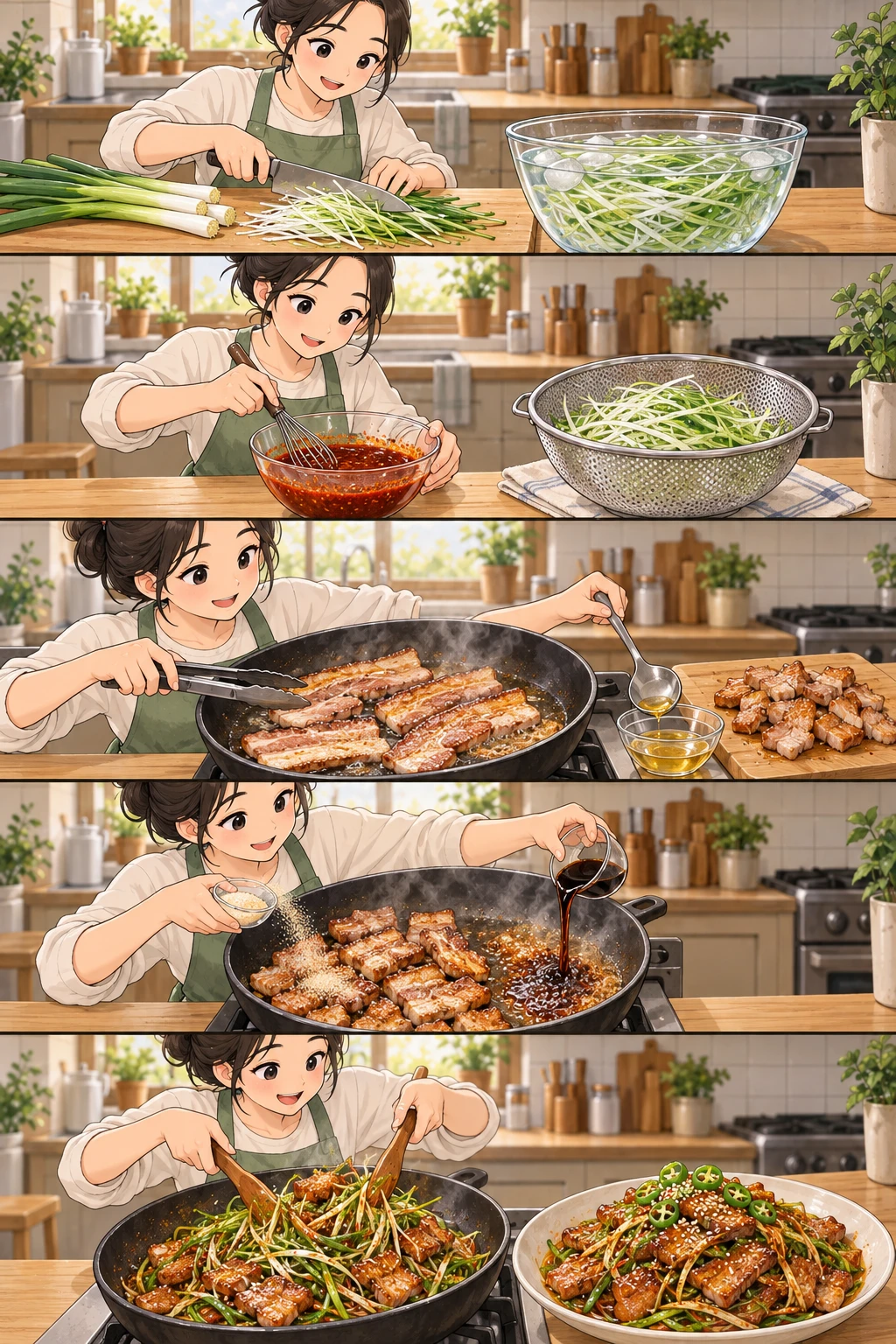
A quick visual memory guide for the whole recipe.
 1
1Shred and soak
10 minCut the green onions into long, hair-thin strips, soak them in cold water for 5 minutes, then drain and dry them thoroughly.
- 2
Mix the pachae sauce
3 minWhisk gochugaru, cooking wine, maesil-cheong, soy sauce, corn syrup, and pepper. Keep it separate from the green onions for now.
- 3
Brown the pork
10 minSear the pork belly on both sides, cut it into bite-size pieces, and carefully spoon away about half the rendered fat.
- 4
Caramelize and glaze
3 minSprinkle sugar over the pork, then bubble soy sauce in the hot side of the pan before tossing until the meat looks glossy.
- 5
Toss the scallions last
3 minSeason the drained green onions only now, toss them with the pork just until lightly wilted, and finish with sesame and chile.
AI-assisted illustration. Follow the written recipe below for exact measurements, pan heat, fat handling, and pork doneness.
DIRECTIONS
How to make it
- 01
Julienne, soak, and dry the green onions · 10 minutes
Make one shallow lengthwise cut through each green onion and lift out the firm core. Roll the outer layers into loose cylinders and slice them lengthwise into very fine strands; julienne the cores too. Soak all the strands in a large bowl of cold water for 5 minutes, swish once, then drain and spin or pat completely dry.
- 02
Mix the pachae seasoning · 3 minutes
Whisk the gochugaru, cooking wine, maesil-cheong, 1 tablespoon/15 ml soy sauce, corn syrup, and pepper into an even brick-red paste. Thinly slice the Cheongyang chiles. Leave the sauce, chiles, and dry green onions separate; do not dress the onions until the pork is almost finished.
- 03
Sear both sides of the pork belly · 10 minutes
Heat a wide heavy skillet or griddle over medium-high for 2 minutes. Lay in the pork belly in one uncrowded layer, working in two batches if needed. Sear without moving for 3 to 4 minutes, until the underside is deeply golden and fat is pooling. Turn each slice once and cook 2 to 3 minutes more. Cut into 1 1/2-inch/4-cm pieces with kitchen shears or transfer briefly to a board, then return the meat and cook 1 to 2 minutes until no translucent raw center remains. Carefully spoon about half the rendered fat into a heatproof container.
- 04
Caramelize the sugar and scorch the soy · 3 minutes
Keep the pan at medium-high. Sprinkle 2 tablespoons sugar evenly over the pork and toss for 45 to 60 seconds, until the grains dissolve and the edges look tacky. Push the meat aside to expose a patch of hot pan, pour the 3 tablespoons/45 ml soy sauce into the rendered fat there, and let it bubble for 10 to 15 seconds, until nutty-smelling and darkened but not black. Toss the pork continuously for 1 to 2 minutes, until every piece is glossy and browned.
- 05
Season the scallions, toss briefly, and finish · 3 minutes
Add the pachae seasoning to the drained green onions and lift-fold for 20 to 30 seconds, just until evenly coated. Tip them over the pork and toss over medium-high heat for 60 to 90 seconds. Stop when the white strands bend easily, the green parts are still vivid, and no watery sauce pools in the pan. Turn off the heat, drizzle over the sesame oil, scatter with sesame seeds, and top with the sliced chiles. Serve immediately.
COOK WITH CONFIDENCE
Fix common problems
Use the symptom, likely cause, and rescue step while you cook.
The green onions collapse and release water
Likely causeThey were dressed too early, left wet after soaking, or cooked too long.
How to fix itDrain any pooled liquid and serve at once. Next time, dry the strands thoroughly, mix them with their seasoning only when the pork is almost finished, and stop after 60 to 90 seconds in the pan.
The sugar and soy sauce taste bitter
Likely causeThe bare pan was too hot or the soy sauce was left bubbling after it had darkened.
How to fix itLower the heat, move the pork through the sauce immediately, and add 1 tablespoon water if the glaze is still salvageable. Stop when the soy smells toasted, before it turns black or smokes sharply.
The finished dish is greasy instead of glossy
Likely causeToo much rendered pork fat remained before the sugar and soy sauce were added.
How to fix itSpoon away excess fat into a heatproof container, leaving only a thin coating in the pan. Add a handful of fresh shredded green onion at the table to rebalance a rich finished batch.
SHOP & SUBSTITUTE
Cook it anywhere
Ingredient swaps
Korean large green onionsUse enough sturdy Western scallions to reach 10 1/2 ounces/300 g, or combine two medium leeks (white and light-green parts) with four scallions. Wash leek layers carefully before shredding.
Fresh pork bellyUse thinly sliced pork collar or shoulder. Add 1 tablespoon neutral oil before searing and start checking 2 minutes sooner because the leaner meat dries out faster.
Korean cooking wineUse sake or dry sherry. If using sweet mirin, reduce the corn syrup to 2 teaspoons.
Maesil-cheongUse 2 teaspoons mild honey mixed with 1 teaspoon unseasoned rice vinegar.
Corn syrupUse Korean rice syrup or mild honey; the glaze may be a little less shiny.
Cheongyang chileUse two serranos for similar heat, one jalapeño for a milder finish, or omit the fresh chile.
Korean pantry guide
A sturdy, long allium with a substantial white stem and robust green top. Koreans use both parts for aromatic flavor, garnish, and fresh scallion salads.
Search: Korean large green onion daepaKorean red pepper flakes bring fruity chile flavor, color, and moderate heat. Use flakes rather than very hot cayenne powder.
Search: Korean red pepper flakes gochugaruA dark Korean brewed soy sauce commonly used for marinades, braises, and stir-fries; brands vary in saltiness.
Search: Korean brewed soy sauce jin ganjangSweet-tart green plum syrup used to round out Korean marinades and vegetable seasonings.
Search: Korean green plum syrup maesil cheongA seasoned cooking wine used to soften meaty aromas and add gentle sweetness. Check labels because some products contain salt.
Search: Korean cooking wine matsulA clear Korean syrup that gives stir-fries gloss and a clean, neutral sweetness; it is not the same as high-fructose corn syrup.
Search: Korean corn syrup mulyeotA slim Korean green chile with direct, assertive heat and a fresh grassy aroma.
Search: Korean Cheongyang green chileServe it with
- Hot Korean short-grain rice
- Lettuce and perilla leaves for ssam wraps
- A mild doenjang soup or steamed egg
Spice level
Hot as written, with 5 tablespoons gochugaru and two Cheongyang chiles. For medium heat, use 3 tablespoons mild gochugaru and one seeded chile. For mild, use 2 tablespoons mild gochugaru and omit the fresh chiles; do not replace gochugaru measure-for-measure with cayenne.
Storage & serving
For the best scallion texture, eat immediately. Refrigerate leftovers in a shallow airtight container within 2 hours and keep for up to 3 days. Reheat in a wide skillet over medium heat for 3 to 4 minutes, stirring often, until the pork reaches 165°F/74°C; the scallions will soften further. Do not freeze the finished dish.
REAL COOK QUESTIONS
Good questions, clear answers
Short answers for substitutions, heat level, make-ahead cooking, and serving.
What can I substitute for Korean large green onions in Pachae Jeyuk (파채 제육)?
Use enough sturdy Western scallions to reach 10 1/2 ounces/300 g, or combine two medium leeks (white and light-green parts) with four scallions. Wash leek layers carefully before shredding.
Is Pachae Jeyuk (파채 제육) spicy?
Hot as written, with 5 tablespoons gochugaru and two Cheongyang chiles. For medium heat, use 3 tablespoons mild gochugaru and one seeded chile. For mild, use 2 tablespoons mild gochugaru and omit the fresh chiles; do not replace gochugaru measure-for-measure with cayenne.
Can I make Pachae Jeyuk (파채 제육) ahead of time?
For the best scallion texture, eat immediately. Refrigerate leftovers in a shallow airtight container within 2 hours and keep for up to 3 days. Reheat in a wide skillet over medium heat for 3 to 4 minutes, stirring often, until the pork reaches 165°F/74°C; the scallions will soften further. Do not freeze the finished dish.
What should I serve with Pachae Jeyuk (파채 제육)?
Serve it with Hot Korean short-grain rice, Lettuce and perilla leaves for ssam wraps, A mild doenjang soup or steamed egg.
KEEP COOKING
Related Korean recipes
Chosen by shared ingredients, pantry staples, and cooking style.