KOREAN HOME COOKING
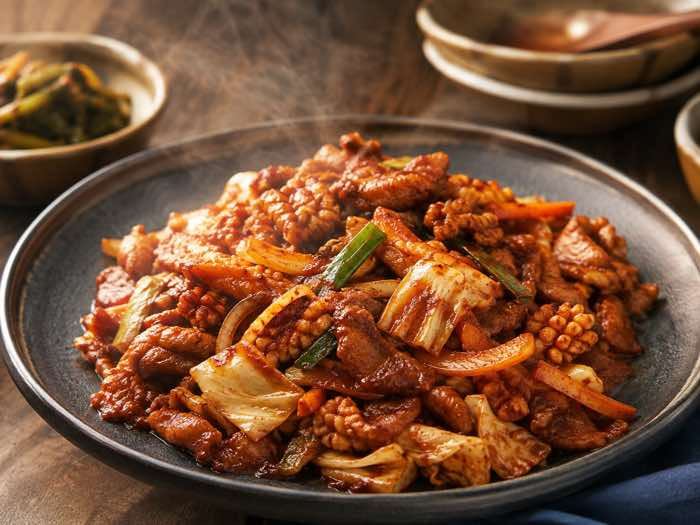
Ojingeo Jeyuk Bokkeum (오징어제육볶음): Spicy Squid and Pork
오징어제육 · Ojingeo Jeyuk
Tender pork and quick-cooked squid are coated in a bold gochujang glaze with smoky stir-fried vegetables for a generous Korean family meal.
Editorial guidance updated September 16, 2026 · Not a claim of kitchen testing
 오징어제육 · Ojingeo Jeyuk
QUICK ANSWER
What to know before you cook
Tender pork and quick-cooked squid are coated in a bold gochujang glaze with smoky stir-fried vegetables for a generous Korean family meal.
Ojingeo Jeyuk Bokkeum (오징어제육볶음) takes about 45 minutes and makes 6 servings. It is rated moderate and the finished dish is hot. For medium heat, halve both gochugaru and gochujang and add 2 tablespoons water; for mild heat, use mild gochujang and omit fresh chiles.
The key cooking cue: Squid toughens quickly; its blanch and final stir-fry should both be brief.
WHY THIS DISH MATTERS
A little cultural context
Jeyuk-bokkeum usually means spicy stir-fried pork. Adding squid creates a popular surf-and-turf combination whose contrasting textures are especially good with rice.
INGREDIENTS
What you'll need
Both systems are shown so you can cook without converting.
COOKING WEBTOON
Cook it panel by panel
A quick visual memory guide for the whole recipe.
 1
Prep everything first
20 secondsSlice the vegetables and pork. Score the squid lightly, cut into bite-size pieces, and blanch for 20 seconds; drain immediately.
- 2
Mix the sauce
Combine gochujang, gochugaru, soy sauce, cooking wine, garlic, rice syrup, sugar, and black pepper.
- 3
Char the vegetables
Stir-fry the vegetables in batches over high heat until lightly blistered but still crisp. Transfer to a plate.
- 4
Cook pork, then squid
Make scallion oil in the hot pan, add pork, and stir-fry until nearly cooked. Add sauce, then toss in squid just until opaque.
- 5
Finish
Return the vegetables, toss over high heat, and finish with sesame oil.
AI-assisted illustration. Follow the written recipe below for exact measurements, doneness, and food-safety details.
DIRECTIONS
How to make it
- 01
Prep everything first
Slice the vegetables and pork. Score the squid lightly, cut into bite-size pieces, and blanch for 20 seconds; drain immediately.
- 02
Mix the sauce
Combine gochujang, gochugaru, soy sauce, cooking wine, garlic, rice syrup, sugar, and black pepper.
- 03
Char the vegetables
Stir-fry the vegetables in batches over high heat until lightly blistered but still crisp. Transfer to a plate.
- 04
Cook pork, then squid
Make scallion oil in the hot pan, add pork, and stir-fry until nearly cooked. Add sauce, then toss in squid just until opaque.
- 05
Finish
Return the vegetables, toss over high heat, and finish with sesame oil.
COOK WITH CONFIDENCE
Fix common problems
Use the symptom, likely cause, and rescue step while you cook.
Squid becomes rubbery
Likely causeIt stayed in the pan throughout the pork cooking.
How to fix itCook pork through first, then add squid for the brief finishing stage until opaque. Thin cuts and an uncrowded pan help both cook evenly.
Sauce becomes watery
Likely causeWet squid and crowded vegetables release liquid.
How to fix itPat seafood dry and cook in batches. Let excess liquid evaporate before coating with sauce; do not extend cooking just to rescue an overcrowded pan.
SHOP & SUBSTITUTE
Cook it anywhere
Ingredient swaps
SquidUse cleaned calamari tubes and tentacles, fully thawed and patted dry.
Rice syrupUse corn syrup or mild honey, reducing the amount slightly for honey.
Korean pantry guide
A fermented Korean chile paste that brings heat, sweetness, savoriness, and body.
Search: Korean gochujang fermented chili pasteKorean red pepper flakes with a fruity aroma and a range of heat levels.
Search: Korean red pepper flakes gochugaru coarseA clear syrup used for gloss and gentle sweetness in Korean sauces.
Search: Korean rice corn syrup mulyeotServe it with
- Steamed rice
- Lettuce and perilla wraps
- Cucumber salad
Spice level
Hot. For medium heat, halve both gochugaru and gochujang and add 2 tablespoons water; for mild heat, use mild gochujang and omit fresh chiles.
Storage & serving
Refrigerate for up to 2 days. Reheat quickly in a skillet; extended heat makes squid rubbery.
REAL COOK QUESTIONS
Good questions, clear answers
Short answers for substitutions, heat level, make-ahead cooking, and serving.
What can I substitute for Squid in Ojingeo Jeyuk Bokkeum (오징어제육볶음)?
Use cleaned calamari tubes and tentacles, fully thawed and patted dry.
Is Ojingeo Jeyuk Bokkeum (오징어제육볶음) spicy?
Hot. For medium heat, halve both gochugaru and gochujang and add 2 tablespoons water; for mild heat, use mild gochujang and omit fresh chiles.
Can I make Ojingeo Jeyuk Bokkeum (오징어제육볶음) ahead of time?
Refrigerate for up to 2 days. Reheat quickly in a skillet; extended heat makes squid rubbery.
What should I serve with Ojingeo Jeyuk Bokkeum (오징어제육볶음)?
Serve it with Steamed rice, Lettuce and perilla wraps, Cucumber salad.
KEEP COOKING
Related Korean recipes
Chosen by shared ingredients, pantry staples, and cooking style.