KOREAN HOME COOKING
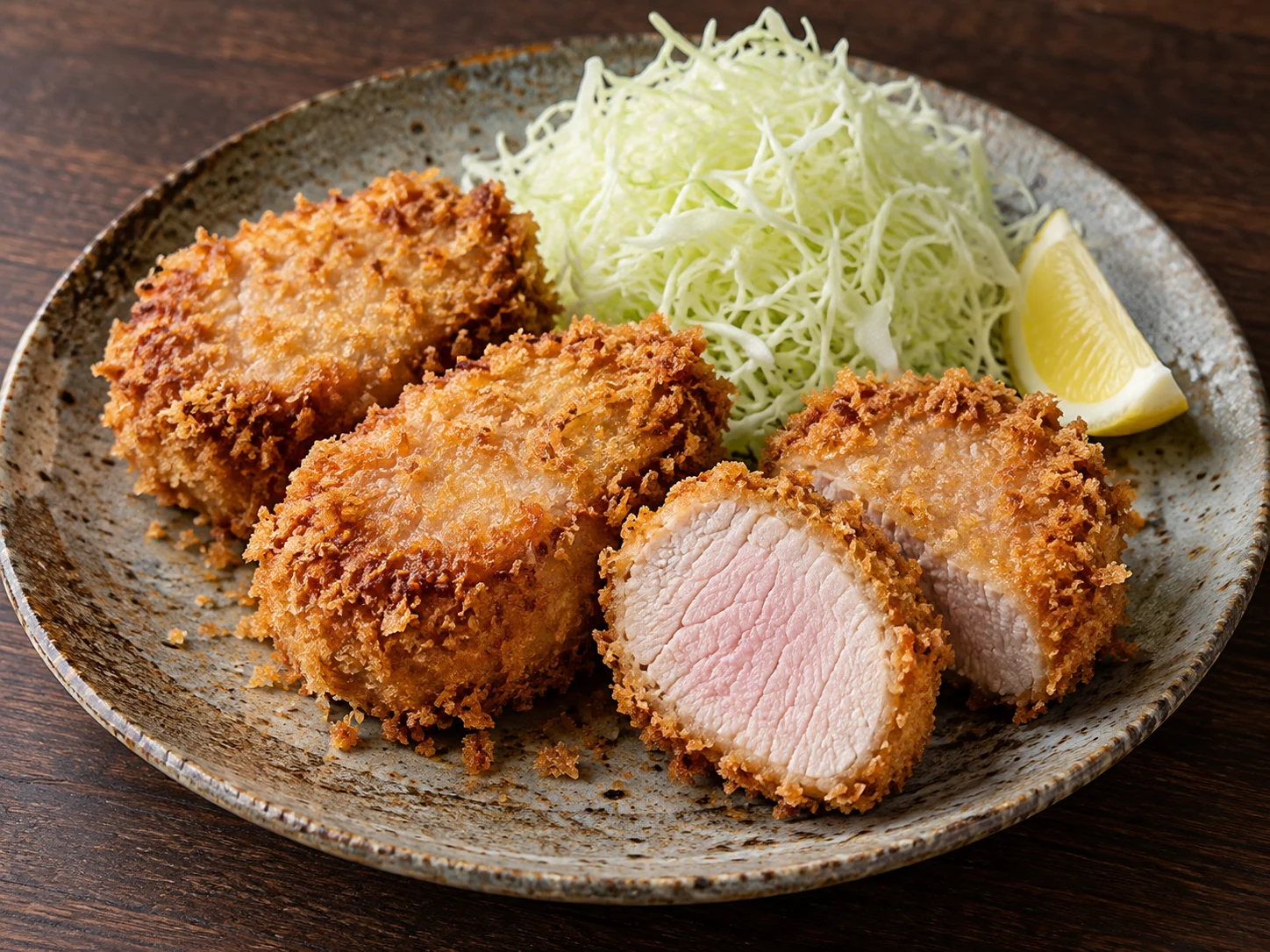
Ansim Katsu (안심카츠): Sous-Vide Pork Tenderloin Cutlets
안심카츠 · Ansim Katsu
Pork tenderloin is gently cooked whole with garlic and sake, cut into thick medallions, wrapped in feathery fresh panko, and flash-fried for a crisp crust and juicy center.
Editorial guidance updated September 16, 2026 · Not a claim of kitchen testing
QUICK ANSWER
What to know before you cook
Pork tenderloin is gently cooked whole with garlic and sake, cut into thick medallions, wrapped in feathery fresh panko, and flash-fried for a crisp crust and juicy center.
Ansim Katsu (안심카츠) takes about 95 minutes and makes 3 servings. It is rated moderate and the finished dish is not spicy. Black pepper supplies only gentle warmth. For a child-friendly plate, use half the pepper; for heat, serve Korean mustard, hot tonkatsu sauce, or gochujang mayo on the side so the delicate pork remains unchanged.
The key cooking cue: The official method tenderizes the whole piece before seasoning. Keep the pork cold and clean the mallet, board, knife, and hands before handling anything cooked.
WHY THIS DISH MATTERS
A little cultural context
Katsu belongs to Japanese yōshoku, the family of Western-influenced dishes that developed in modern Japan and later became deeply familiar across Korea. Korean menus distinguish 등심카츠 (deungsim-katsu, loin cutlet) from 안심카츠 (ansim-katsu, tenderloin cutlet). Chef Kouji’s Altoran version cooks the tenderloin whole at low temperature before breading thick medallions, so the final dip in hot oil is brief and focused on building a crisp crust.
INGREDIENTS
What you'll need
Both systems are shown so you can cook without converting.
COOKING WEBTOON
Cook it panel by panel
A quick visual memory guide for the whole recipe.
 1
1Season the whole tenderloin
10 minTrim and gently tenderize the pork, then season it with salt, pepper, and minced garlic while the water bath heats.
- 2
Seal and sous vide
1 hrBag the pork with sake, remove the air, and keep it fully submerged in a preheated 145°F/63°C water bath for 1 hour.
- 3
Dry and cut thick
5 minRemove the pork, pat it very dry, and slice it crosswise into even 3/4-inch/2-cm medallions.
- 4
Bread every surface
8 minLightly flour each piece, cover it in beaten egg, and press fluffy fresh panko onto the faces and edges.
- 5
Flash-fry and rest
5 minFry at 355°F/180°C for 2 minutes, turning once when the underside is golden; verify 145°F/63°C, then rest 3 minutes.
AI-assisted illustration. Follow the written recipe below for exact measurements, water-bath and oil temperatures, raw-pork hygiene, and the 145°F/63°C plus 3-minute-rest safety check.
DIRECTIONS
How to make it
- 01
Preheat the bath, trim, and season · 10 minutes
Preheat a sous-vide bath to 145°F/63°C. Trim the silver skin from the 300 g tenderloin and choose an even section no thicker than about 2 1/2 inches/6 cm. Cover it and tap lightly with a meat tenderizer or the flat side of a mallet—do not flatten it. Season all over with about two-thirds of the salt and pepper, then spread on the minced garlic.
- 02
Seal with sake and sous vide · 1 hour
Put the seasoned pork and 1 tablespoon sake in a heat-safe sous-vide bag. Vacuum-seal it, or lower an open freezer-grade zipper bag into the water to push out the air and seal above the waterline. Submerge the pork completely in the fully preheated bath and cook at 145°F/63°C for 1 hour. Keep the circulator flowing freely and start timing only when the bath is back at temperature.
- 03
Remove, dry, and slice · 5 minutes
Lift out the bag, open it carefully, and discard the liquid. Pat the tenderloin thoroughly dry so the coating can adhere. Cut straight across the grain into 3/4-inch/2-cm medallions. Sprinkle the cut faces lightly with the remaining salt and pepper.
- 04
Coat with flour, egg, and fresh panko · 8 minutes
Set out three shallow dishes. Coat each medallion in a thin layer of flour and tap off loose powder. Dip in beaten egg until no dry flour remains, then place in the fresh panko and gently cup the crumbs around the faces and edges. Set on a clean tray while the oil heats.
- 05
Fry for 2 minutes, verify, and rest · 5 minutes
Heat at least 2 inches/5 cm neutral oil in a heavy pot to 355°F/180°C, keeping the pot no more than half full. Fry in a single uncrowded batch for 2 minutes total. Turn once with long tongs after about 60 seconds, when the underside is set and golden; the bubbling should stay lively without smoking. Drain on a wire rack. Check the thickest medallion from the side: it must register at least 145°F/63°C, then rest every piece for 3 minutes before serving. If a piece is cooler, return it to 325°F/165°C oil briefly and recheck.
COOK WITH CONFIDENCE
Fix common problems
Use the symptom, likely cause, and rescue step while you cook.
The crust darkens before 2 minutes
Likely causeThe oil climbed above 355°F/180°C or loose panko is scorching in the pot.
How to fix itLower the heat, skim out burnt crumbs between batches, and keep the oil near 350–355°F/175–180°C. Verify the pork center with a thermometer instead of extending the fry by color alone.
The coating slides off
Likely causeThe sous-vide pork was still wet, loose flour remained, or egg missed part of an edge.
How to fix itPat every medallion very dry, tap off excess flour, cover all flour with egg, and cup fresh panko firmly around each edge before frying.
The pork is dry despite the sous vide
Likely causeThe tenderloin was much thinner than the recipe target, stayed in the bath too long, or was fried beyond the brief finish.
How to fix itUse an even center section, use the stated bath and frying times as estimates, and verify the center reaches 145°F/63°C before serving. Serve after the 3-minute rest.
SHOP & SUBSTITUTE
Cook it anywhere
Ingredient swaps
Pork tenderloinAsk for pork fillet, pork filet, or whole 안심. Avoid pork loin: it is wider and will not heat or slice like the broadcast cut.
Fresh coarse pankoMist 100 g dry panko with 1 to 2 tablespoons water, toss very well, and rest 5 minutes. It should feel flexible and fluffy, never soggy.
Japanese cooking sake or Korean cheongjuUse dry sake, dry sherry, or 1 tablespoon water. Avoid sweet mirin because it changes the seasoning.
Korean pancake flourThe official recipe permits all-purpose flour; rice flour or a cup-for-cup gluten-free blend also works if the panko is gluten-free.
Sous-vide bagUse a sturdy freezer-grade zipper bag rated for heated food and the water-displacement method. Do not use thin storage bags.
Korean pantry guide
A lean, tender whole muscle from inside the loin. In Korean, ansim means the tenderloin cut rather than the broader pork loin.
Search: pork tenderloin pork fillet dwaeji ansim 안심Soft, coarse fresh breadcrumbs that produce the tall, feathery crust used for Japanese- and Korean-style cutlets.
Search: fresh panko wet breadcrumbs seupsik ppanggaru 습식빵가루A dry rice wine used to soften meat aroma and add gentle sweetness. Korean recipes often use the everyday term jeongjong for this style of sake.
Search: Japanese cooking sake Korean cheongju jeongjong 정종The Korean spelling for Japanese-style breaded cutlets, now familiar in Korean restaurants, supermarkets, and home cooking.
Search: Korean ansim katsu pork tenderloin cutlet 안심카츠Serve it with
- Finely shredded cabbage with a light sesame or rice-vinegar dressing
- Steamed short-grain rice, mild miso or doenjang soup, and kimchi
- Tonkatsu sauce, lemon, or a small dish of Korean mustard served on the side
Spice level
Not spicy. Black pepper supplies only gentle warmth. For a child-friendly plate, use half the pepper; for heat, serve Korean mustard, hot tonkatsu sauce, or gochujang mayo on the side so the delicate pork remains unchanged.
Storage & serving
Serve immediately for the lightest crust. Refrigerate cooked cutlets within 2 hours and keep for up to 3 days. Reheat on a rack in a 375°F/190°C oven or air fryer for 7 to 10 minutes, turning once, until crisp and the center reaches 165°F/74°C. Do not store the sous-vide pork warm in its bag; if preparing it ahead, chill the sealed bag rapidly in ice water and refrigerate, then rewarm in a 145°F/63°C bath before slicing, breading, and frying.
REAL COOK QUESTIONS
Good questions, clear answers
Short answers for substitutions, heat level, make-ahead cooking, and serving.
What can I substitute for Pork tenderloin in Ansim Katsu (안심카츠)?
Ask for pork fillet, pork filet, or whole 안심. Avoid pork loin: it is wider and will not heat or slice like the broadcast cut.
Is Ansim Katsu (안심카츠) spicy?
Not spicy. Black pepper supplies only gentle warmth. For a child-friendly plate, use half the pepper; for heat, serve Korean mustard, hot tonkatsu sauce, or gochujang mayo on the side so the delicate pork remains unchanged.
Can I make Ansim Katsu (안심카츠) ahead of time?
Serve immediately for the lightest crust. Refrigerate cooked cutlets within 2 hours and keep for up to 3 days. Reheat on a rack in a 375°F/190°C oven or air fryer for 7 to 10 minutes, turning once, until crisp and the center reaches 165°F/74°C. Do not store the sous-vide pork warm in its bag; if preparing it ahead, chill the sealed bag rapidly in ice water and refrigerate, then rewarm in a 145°F/63°C bath before slicing, breading, and frying.
What should I serve with Ansim Katsu (안심카츠)?
Serve it with Finely shredded cabbage with a light sesame or rice-vinegar dressing, Steamed short-grain rice, mild miso or doenjang soup, and kimchi, Tonkatsu sauce, lemon, or a small dish of Korean mustard served on the side.
KEEP COOKING
Related Korean recipes
Chosen by shared ingredients, pantry staples, and cooking style.