KOREAN HOME COOKING
Yangbaechu Kimchi (양배추김치): Fresh Green Cabbage Kimchi
양배추김치 · Yangbaechu Kimchi
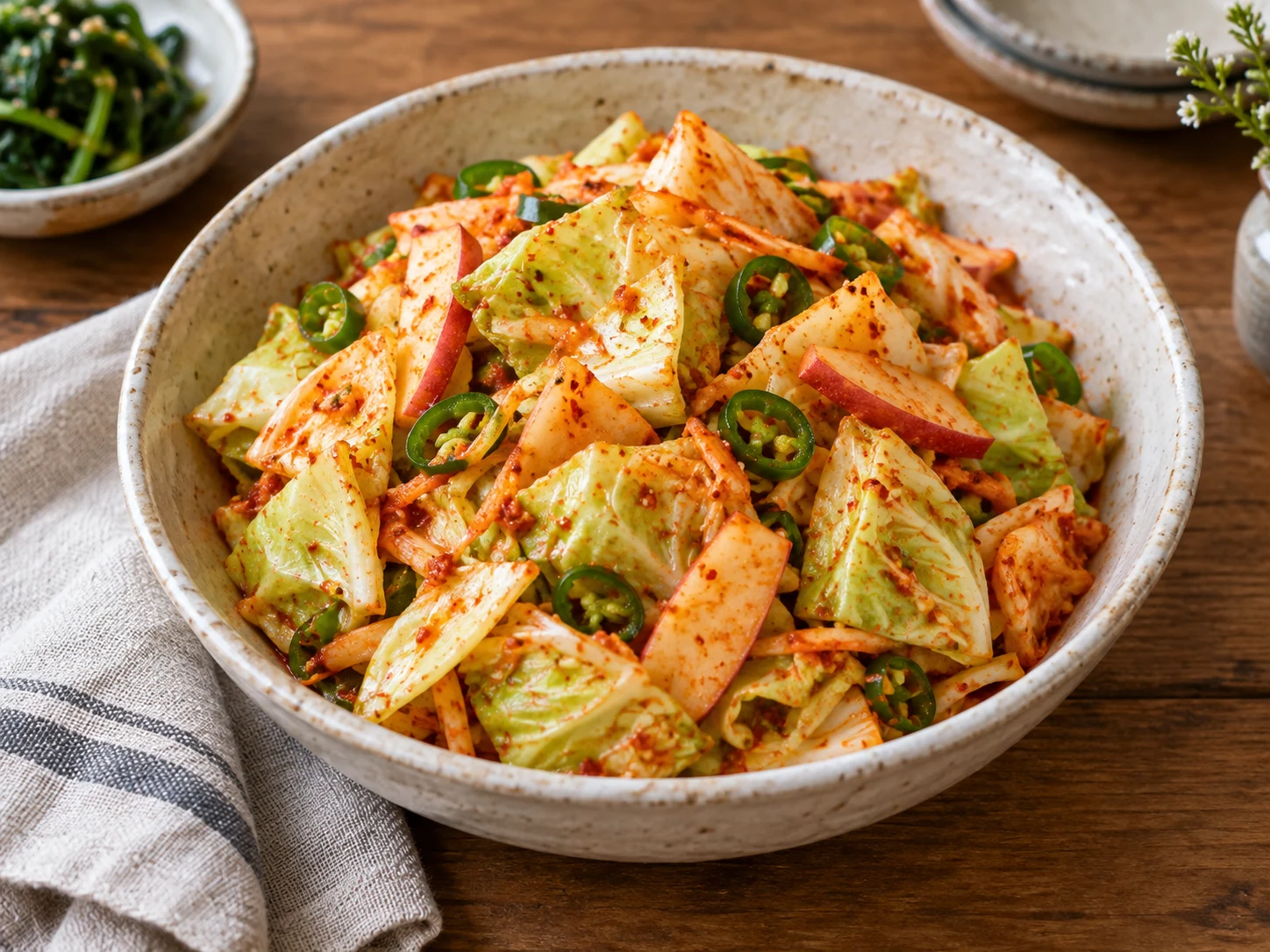
Crisp green cabbage, apple, and mild chile are tossed in a bright red pepper sauce thickened naturally with potato for an easy, fresh kimchi you can serve the same day.
Editorially reviewed for global home kitchens · Updated September 15, 2026
QUICK ANSWER
What to know before you cook
Crisp green cabbage, apple, and mild chile are tossed in a bright red pepper sauce thickened naturally with potato for an easy, fresh kimchi you can serve the same day.
Yangbaechu Kimchi (양배추김치) takes about 58 minutes and makes 6 servings. It is rated easy and the finished dish is mild to medium. Seed the green chiles and replace 1 tablespoon of the gochugaru with sweet paprika for a gentler batch. For more heat, leave the chile seeds in or add one thinly sliced Cheongyang chile at the table.
The key cooking cue: The official method uses green cabbage in salt water, not napa cabbage packed in dry salt. Keep the pieces fairly large so they stay crunchy.
WHY THIS DISH MATTERS
A little cultural context
Yangbaechu means the round green cabbage common in Western supermarkets, while baechu usually means napa cabbage in a kimchi context. This Altoran version is a quick, fresh cabbage kimchi: apple and red bell pepper supply fruitiness, and a boiled potato gives the loose seasoning enough body to cling. It is tossed and served without the long fermentation associated with winter kimjang kimchi.
INGREDIENTS
What you'll need
Both systems are shown so you can cook without converting.
COOKING WEBTOON
Cook it panel by panel
A quick visual memory guide for the whole recipe.
 1
1Cut and brine the cabbage
30 minCut ordinary green cabbage into bite-size pieces and submerge it in the measured salt water for 30 minutes.
- 2
Prepare the crisp add-ins
8 minCore the apple, then cut half into blender chunks and half into thin bite-size pieces. Seed and slice the mild green chiles.
- 3
Blend the red seasoning
3 minBlend red bell pepper, half the apple, onion, potato, gochugaru, maesil syrup, garlic, fish sauce, salt, and water until smooth.
- 4
Drain without squeezing
10 minTip the brined cabbage into a colander and let it drain thoroughly. Keep the crisp layers intact rather than wringing them.
- 5
Toss and serve fresh
3 minGently coat the cabbage, remaining apple, and green chile with the sauce. Stop as soon as every piece is lightly dressed.
AI-assisted illustration. Follow the written recipe below for exact measurements, brining time, seasoning order, and storage guidance.
DIRECTIONS
How to make it
- 01
Cut and brine the cabbage · 30 minutes
Trim the core from the green cabbage and cut the leaves into 1 1/2-inch/4-cm bite-size pieces. Dissolve 1 1/2 tablespoons salt in 1 liter cool water, add the cabbage, and place a small plate on top to keep it submerged. Brine for 30 minutes, turning the cabbage once at 15 minutes. It is ready when the thick ribs bend slightly but still snap and taste lightly seasoned.
- 02
Prepare the apple and chiles · 8 minutes
While the cabbage brines, core the apple. Cut half into rough blender chunks and slice the other half into thin 1-inch/2.5-cm pieces. Seed the mild green chiles for less heat, then slice them into thin rings. Cut the onion, bell pepper, and cooled boiled potato into chunks that your blender can handle.
- 03
Blend the seasoning · 3 minutes
Add the red bell pepper, apple chunks, onion, potato, gochugaru, maesil-cheong, garlic, anchovy fish sauce, seasoning salt, and 200 ml water to a blender. Start on low, then blend on high for 45 to 60 seconds, scraping once if needed, until the sauce is smooth, red-orange, and thick enough to coat a spoon rather than separating into watery layers.
- 04
Drain thoroughly · 10 minutes
Pour the cabbage into a colander and drain for 10 minutes, turning it once. Do not squeeze the leaves. The source does not instruct a rinse; taste a thick rib after draining. If it is unpleasantly salty rather than lightly seasoned, give the cabbage one very quick cold-water rinse and drain for another 10 minutes.
- 05
Toss, check, and serve · 3 to 5 minutes
Put the drained cabbage, sliced apple, and green chile in a wide nonreactive bowl. Add the blended seasoning and fold from the bottom with gloved hands or two large spoons for 2 to 3 minutes. Stop when every surface is lightly coated, the cabbage still feels crisp, and a small pool of red-orange sauce gathers at the bottom. Serve immediately or chill for 30 minutes; the verified broadcast method finishes here and does not call for room-temperature fermentation.
COOK WITH CONFIDENCE
Fix common problems
Use the symptom, likely cause, and rescue step while you cook.
The cabbage tastes too salty
Likely causeThe pieces drained poorly, the salt was packed into the spoon, or the fish sauce brand is saltier than the Korean source product.
How to fix itGive the cabbage one quick cold-water rinse before adding the sauce, then drain for 10 minutes. If it is already mixed, fold in more unseasoned green cabbage and apple; do not add more water directly to the finished bowl.
The seasoning slides off and looks watery
Likely causeThe cabbage carried brine into the bowl, the potato was very small, or the sauce was not blended until smooth.
How to fix itLift the solids out with a slotted spoon, blend 2 to 3 tablespoons of the loose sauce with a little extra cooled boiled potato, then fold it back in. Next time, drain the cabbage for the full 10 minutes.
The cabbage and apple turn soft
Likely causeThe cabbage was cut too small, brined too long, squeezed, or left at room temperature after mixing.
How to fix itChill the kimchi immediately and serve it within a day as a softer side dish. For the next batch, keep 1 1/2-inch/4-cm pieces, stop the brine when the ribs still snap, and refrigerate as soon as it is tossed.
SHOP & SUBSTITUTE
Cook it anywhere
Ingredient swaps
Round green cabbageSavoy cabbage works, but its leaves soften faster; brine for 20 minutes and check the ribs before draining.
Mild Korean cucumber chilesUse shishito peppers, cubanelle pepper, or a small Anaheim chile. Green bell pepper is the no-heat option.
Maesil-cheongMix 2 tablespoons mild honey or rice syrup with 1 tablespoon rice vinegar. The flavor is different but keeps the sweet-tart balance.
Korean anchovy fish sauceUse a good Thai or Vietnamese fish sauce, starting with 1 1/2 tablespoons because saltiness varies by brand.
Fine gochugaruPulse coarse gochugaru briefly, or combine 1 tablespoon Aleppo pepper with 1 tablespoon sweet paprika. Do not use straight cayenne.
AppleUse a crisp Asian pear or firm ripe pear, dividing it the same way.
Korean pantry guide
Finely ground Korean red pepper gives a smooth kimchi sauce, warm fruitiness, and an even red color.
Search: fine Korean red pepper powder goun gochugaru 고운 고춧가루A sweet-tart Korean green plum syrup used to round out dressings, marinades, and kimchi seasoning.
Search: Korean green plum syrup maesil cheong 매실청A salty, deeply savory fermented anchovy seasoning widely used in Korean kimchi and soups.
Search: Korean anchovy fish sauce myeolchi aekjeot 멸치액젓A long, crisp, mild Korean green chile often eaten raw with ssamjang; it adds crunch with little heat.
Search: Korean cucumber pepper oi gochu 오이고추Serve it with
- Steamed short-grain rice and a mild doenjang soup
- Grilled pork, chicken, or tofu
- Korean noodles or a simple lunchbox meal
Spice level
Mild to medium. Seed the green chiles and replace 1 tablespoon of the gochugaru with sweet paprika for a gentler batch. For more heat, leave the chile seeds in or add one thinly sliced Cheongyang chile at the table.
Store & reheat
Pack into a clean airtight container and refrigerate promptly for up to 4 days. The cabbage and apple are crispest during the first 2 days. Press the vegetables under the sauce before closing, use clean utensils, and discard the batch if it develops mold, a rotten odor, or unusual sliminess. Serve cold or cool; do not reheat this fresh kimchi.
REAL COOK QUESTIONS
Good questions, clear answers
Short answers for substitutions, heat level, make-ahead cooking, and serving.
What can I substitute for Round green cabbage in Yangbaechu Kimchi (양배추김치)?
Savoy cabbage works, but its leaves soften faster; brine for 20 minutes and check the ribs before draining.
Is Yangbaechu Kimchi (양배추김치) spicy?
Mild to medium. Seed the green chiles and replace 1 tablespoon of the gochugaru with sweet paprika for a gentler batch. For more heat, leave the chile seeds in or add one thinly sliced Cheongyang chile at the table.
Can I make Yangbaechu Kimchi (양배추김치) ahead of time?
Pack into a clean airtight container and refrigerate promptly for up to 4 days. The cabbage and apple are crispest during the first 2 days. Press the vegetables under the sauce before closing, use clean utensils, and discard the batch if it develops mold, a rotten odor, or unusual sliminess. Serve cold or cool; do not reheat this fresh kimchi.
What should I serve with Yangbaechu Kimchi (양배추김치)?
Serve it with Steamed short-grain rice and a mild doenjang soup, Grilled pork, chicken, or tofu, Korean noodles or a simple lunchbox meal.
KEEP COOKING
Related Korean recipes
Chosen by shared ingredients, pantry staples, and cooking style.