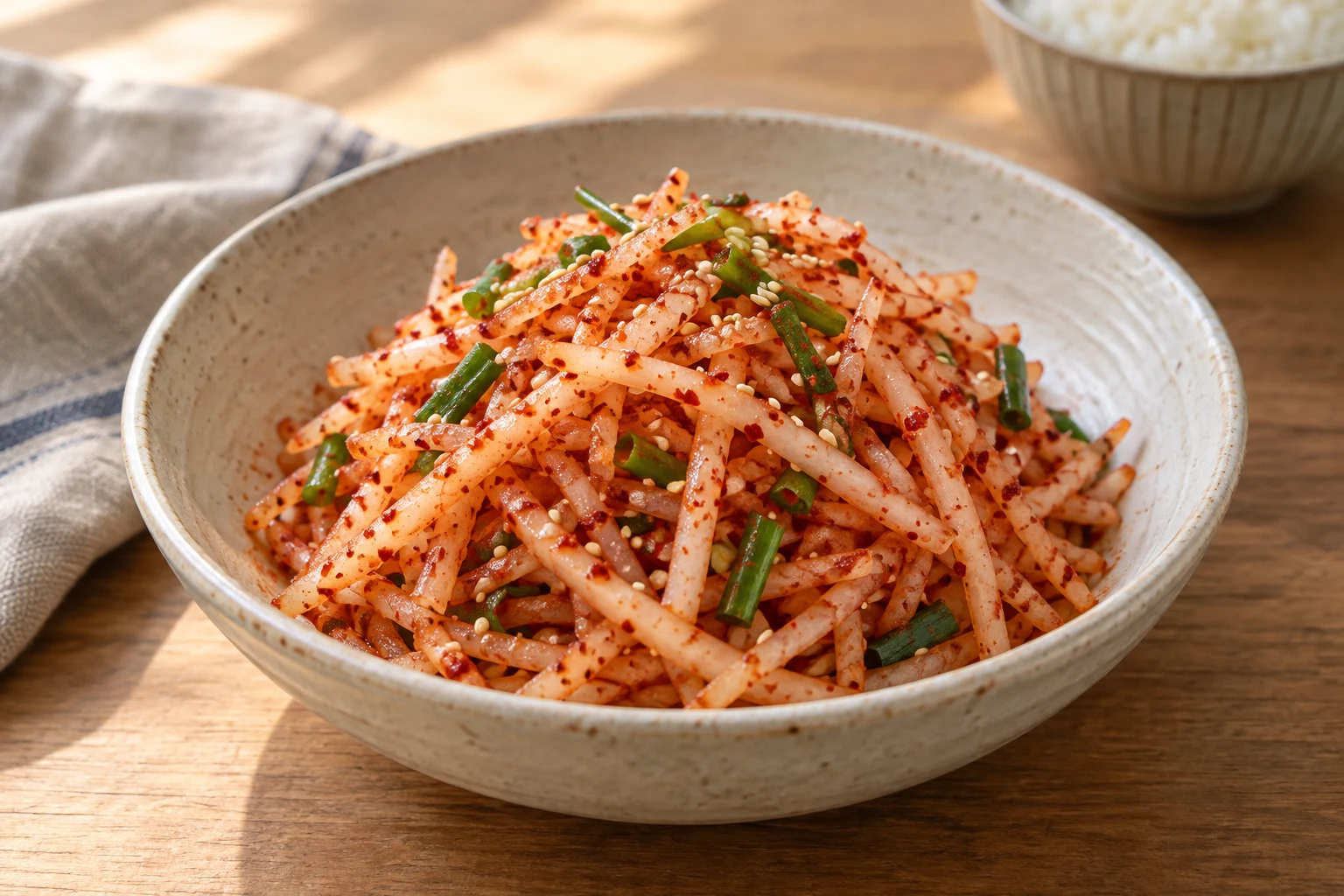
KOREAN HOME COOKING
Musaengchae (무생채): Korean Radish Salad with Wasabi
고추냉이 무생채 · Gochunaengi Musaengchae
Crisp Korean radish gets a bright sweet-sour dressing and a surprising touch of wasabi in this fast, refreshing side dish.
Editorial guidance updated September 16, 2026 · Not a claim of kitchen testing
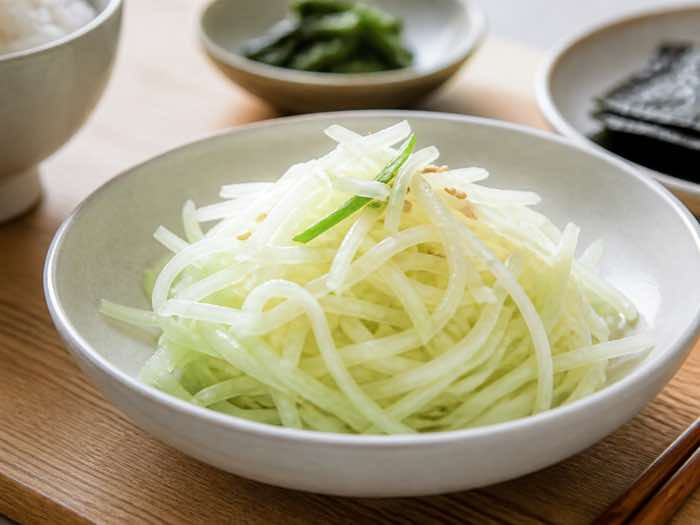 고추냉이 무생채 · Gochunaengi Musaengchae
QUICK ANSWER
What to know before you cook
Crisp Korean radish gets a bright sweet-sour dressing and a surprising touch of wasabi in this fast, refreshing side dish.
Musaengchae (무생채) takes about 20 minutes and makes 4 servings. It is rated easy and the finished dish is sharp rather than chile-hot. Start with 1 1/2 teaspoons wasabi for mild heat and increase to taste.
The key cooking cue: Wasabi brands vary dramatically; begin with half and add more after tasting.
WHY THIS DISH MATTERS
A little cultural context
Classic musaengchae is often red with gochugaru. This pale variation keeps the everyday Korean radish-salad technique but swaps in wasabi for sharp, clean heat.
INGREDIENTS
What you'll need
Both systems are shown so you can cook without converting.
COOKING WEBTOON
Cook it panel by panel
A quick visual memory guide for the whole recipe.
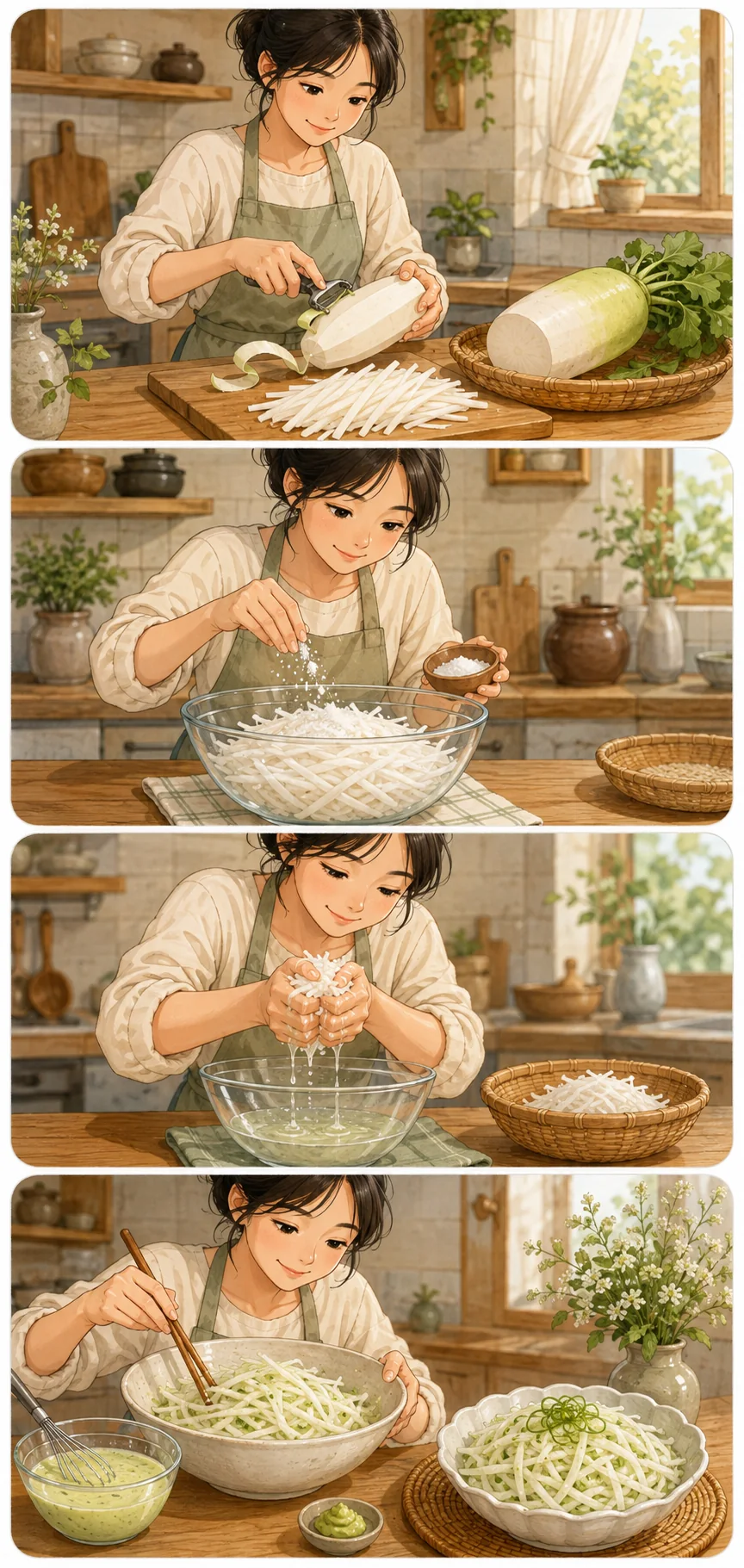 1
Julienne the radish
Peel the radish and cut it into thin 2-inch matchsticks.
- 2
Salt briefly
10 minutesToss with 2 pinches salt and rest for 10 minutes.
- 3
Drain well
Squeeze out excess liquid gently so the finished salad stays crisp rather than watery.
- 4
Dress and serve
Whisk wasabi, vinegar, sugar, fish sauce, and the remaining salt. Toss with the radish and serve immediately.
AI-assisted illustration. Follow the written recipe below for exact measurements, doneness, and food-safety details.
DIRECTIONS
How to make it
- 01
Julienne the radish
Peel the radish and cut it into thin 2-inch matchsticks.
- 02
Salt briefly
Toss with 2 pinches salt and rest for 10 minutes.
- 03
Drain well
Squeeze out excess liquid gently so the finished salad stays crisp rather than watery.
- 04
Dress and serve
Whisk wasabi, vinegar, sugar, fish sauce, and the remaining salt. Toss with the radish and serve immediately.
COOK WITH CONFIDENCE
Fix common problems
Use the symptom, likely cause, and rescue step while you cook.
The salad pools water
Likely causeRadish was dressed too early.
How to fix itDrain pooled liquid and toss just before serving. Add more fresh radish if the dressing is concentrated; do not rinse away the finished dressing.
Wasabi dominates
Likely causePaste strengths differ by brand.
How to fix itStart with less wasabi and taste before adding more. Fold in extra radish to soften an overly sharp finished batch.
SHOP & SUBSTITUTE
Cook it anywhere
Ingredient swaps
Korean radishUse daikon. Choose a firm, heavy piece and cut it slightly thicker if it is watery.
Fish sauceUse Korean soup soy sauce for a vegetarian-friendly version.
Korean pantry guide
A stout white-and-green radish that is sweeter, crisper, and denser than many daikon varieties.
Search: Korean radish mu freshA salty fermented seasoning used in kimchi and vegetable side dishes.
Search: Korean fish sauce aekjeot anchovy sand lanceServe it with
- Grilled meat
- Bibimbap
- Steamed rice and soup
Spice level
Sharp rather than chile-hot. Start with 1 1/2 teaspoons wasabi for mild heat and increase to taste.
Storage & serving
Best the day it is made. Refrigerate up to 2 days; drain accumulated liquid before serving.
REAL COOK QUESTIONS
Good questions, clear answers
Short answers for substitutions, heat level, make-ahead cooking, and serving.
What can I substitute for Korean radish in Musaengchae (무생채)?
Use daikon. Choose a firm, heavy piece and cut it slightly thicker if it is watery.
Is Musaengchae (무생채) spicy?
Sharp rather than chile-hot. Start with 1 1/2 teaspoons wasabi for mild heat and increase to taste.
Can I make Musaengchae (무생채) ahead of time?
Best the day it is made. Refrigerate up to 2 days; drain accumulated liquid before serving.
What should I serve with Musaengchae (무생채)?
Serve it with Grilled meat, Bibimbap, Steamed rice and soup.
KEEP COOKING
Related Korean recipes
Chosen by shared ingredients, pantry staples, and cooking style.